Whisk 50g strong white flour, 50g strong wholemeal flour, and 100ml slightly warm water together until smooth.
Transfer to a large jug or plastic container.
Leave for 1 hour or so in a warm place, then seal, and set aside for 24 hours.
You will need to feed the starter over the next 6 days. Every day, tip away half of the original starter, add an extra 25g of each flour, plus 50ml slightly warm water, then stir well. After a few days you should start to see bubbles on the surface and it will smell yeasty.
On day 7, the starter should be bubbly and smell much sweeter. It is now ready to be used. Make sure you reserve half of the starter and keep feeding, ready for your next loaf.
Tip the white flour, wholemeal flour, 300ml warm water, and 100g of the starter into a bowl, then stir into a dough with a wooden spoon.
Leave somewhere warm for an hour.
Add 25ml more water and the salt, then bring everything together.
Cover, then leave somewhere warm for 3 hours, folding the dough onto itself several times in the first hour. The dough should increase in size by about a third.
Line a medium bowl with a clean tea towel, then flour it really well.
Tip the dough back onto your work surface, shape it into a tight, smooth ball, then dust it with flour.
Place the dough, seam side up, in the bowl, then leave at room temperature for 3 hours, or overnight in the fridge, until risen by about a quarter.
Heat the oven to 230°C/gas mark 8.
Place a casserole dish with a lid, or a baking stone, in the oven for at least 30 minutes to heat up, also placing a roasting tin filled with boiling water underneath.
After 30 minutes, carefully remove the casserole dish, then invert the loaf into it and slash the top.
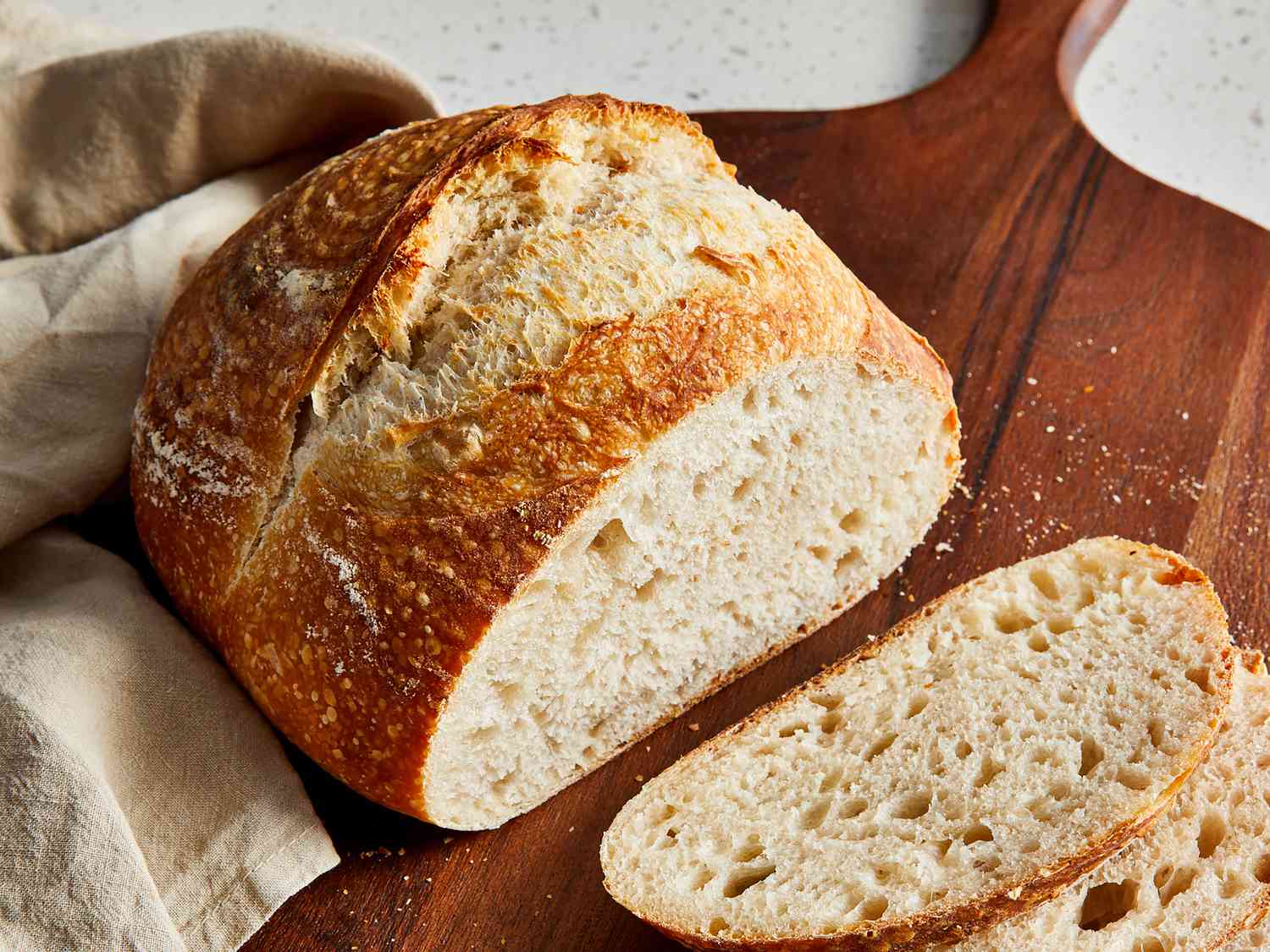
Cover, and bake for 20 minutes, then remove the lid and bake for a further 20 minutes, or until the crust is as dark as you like it.
1 servings